
Electrical Testers

ANENG AN8009 Digital Multimeter Transistor Testers Capacitor True-RMS Tester Automotive Electrical Capacitance Meter Temp Diode

Smart Digital Multimeter 6000 Counts True RMS Auto Electrical Capacitance Meter Temp Resistance Transistor Testers Mmultimetro

Smart Digital Multimeter 6000 Counts Non Contact High Precision Voltage Detector Pen Auto Range Capacitance OHm NCV Tester

Single Phase DIN-Rail Energy Meter 5-80A 220V 50Hz Electronic KWh Meter Power Consumption Monitor DDM15SC

BSIDE New Digital Multimeter Smart 9999 DC/AC Voltage Tester Capacitance Resistance Diode NCV HZ Live Wire Detection Test

1 PC Mini Fiber Optic Detector Optical Power Meter Fiber Optic Attenuation Testing Instrument Orange

Smart Digital Multimeter 4000 Counts Non Contact High Precision Voltage Detector Pen Auto Range Capacitance OHm NCV Tester
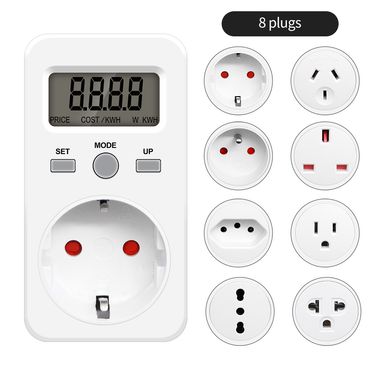
Digital Wattmeter 220V 110V AC Power Meter Electricy consumption Energy Meter EU Plug Power Kilowatt Wattage Electricity Meter

ANENG VD807 Smart Induction Tester Pen AC 12-300V Voltage Tester NCV Sensor Wire Detector 50/60Hz Professional Electrician Tool
ANENG AN8009 Digital Multimeter Transistor Testers Capacitor True-RMS Tester Automotive Electrical Capacitance Meter Temp Diode

BSIDE Smart Digital Multimeter Rechargeable Electronic Tester AC DC Contactless NCV Automatic Diode Capacitor Breakpoint Meter
Electrical Test Equipment: Tools Users Rely on Before Touching a Circuit
When dealing with electricity, most users share the same concern: how do I know what’s safe before I start? Electrical test equipment exists to answer that question clearly. These tools are used not to install or modify electrical systems, but to check their condition before, during, and after work.
From routine household checks to professional maintenance tasks, electrical testing tools provide information that cannot be confirmed by sight alone.
What Users Typically Test in Everyday Situations
In home environments, electrical testing usually begins with simple questions. Is the outlet powered? Is this wire still live? Is the fuse or breaker functioning as expected? Basic testing tools allow users to confirm these conditions without opening walls or dismantling systems.
Voltage testers are often the first tool used, giving a quick indication of live conductors. Multimeters expand this capability by allowing users to measure voltage, current, and resistance, helping diagnose common issues such as faulty switches, broken circuits, or worn components.
Continuity testing is especially useful when tracing wiring paths or checking whether a connection is complete, particularly during renovations or repairs.
Electrical Safety Test Equipment in Planned Work
For users performing planned electrical work—such as installing fixtures, servicing panels, or maintaining equipment—electrical safety test equipment plays a verification role. These tools are used to confirm that circuits are isolated, grounding is intact, and insulation levels meet expected standards.
Unlike quick-check testers, safety testing instruments are typically used before energizing or re-energizing systems. Their readings help users confirm that work has been completed correctly and that systems can be safely returned to operation.
In professional contexts, these tests are often documented, making consistency and repeatability important characteristics of the equipment.
How Electrical Test Probes Affect Measurements
Users often focus on meters, but electrical test probes are equally important. Probes determine how the measuring device interfaces with the circuit. Poor contact, incorrect probe selection, or inadequate insulation can all affect test results.
Different probe designs are suited to different access conditions. Fine-tip probes allow users to reach compact terminals, while insulated probes reduce the risk of accidental contact in higher-voltage environments. Flexible leads help maintain stable contact during hands-free testing.
Choosing appropriate probes improves both measurement accuracy and personal safety.
The Role of Electrical Test Connectors
Electrical test connectors are used when repeated or temporary connections are required during testing. They help maintain stable contact without damaging terminals or conductors. In diagnostic workflows, connectors reduce the need to repeatedly attach and remove probes, improving efficiency and reducing wear.
Reliable connectors also help ensure that readings reflect actual circuit conditions rather than intermittent contact issues.
Electrical Testing in Vehicle Diagnostics
Many users encounter electrical testing when working on vehicles. Modern automotive systems rely on sensors, control units, and wiring networks that require verification during troubleshooting. In this context, electrical testing supports the use of automotive diagnostic tools by confirming power supply, signal continuity, and grounding integrity.
Testing voltage drops, checking resistance, and confirming continuity help users isolate faults without unnecessary component replacement. The principles remain the same as in building systems, even though the environment differs.
Measurement Tools Used Alongside Electrical Testing
While electrical testing focuses on current and voltage, users often work in environments where physical measurement is also required. During home installations or renovations, tools categorized as precise measuring tool solutions may be used alongside electrical equipment.
These tools assist with measuring distances, angles, or alignment during layout and installation tasks. Although they do not test electrical properties, they support accuracy in preparation, which directly affects the quality of electrical work.
What Users Expect from Electrical Test Equipment
Users typically expect electrical testing tools to be easy to read, reliable, and appropriate for the task at hand. Clear displays, stable readings, and durable construction are often valued more than advanced features.
Ultimately, electrical test equipment serves a single purpose: providing clear information before action is taken. For users, having the right tools available means fewer assumptions, safer decisions, and more controlled outcomes.
 4.4 out of 5 based on 9,249 reviews